Year Notes 2025 — a Revolutionary Year in Review

Summary
A key goal this year was to start the councils’ transformation journey with AI; we’ve been cautious and looked for clear ethical use cases, while also considering the environmental impact.
The pace at which AI has permeated our lives this year felt totally unprecedented, even compared to other tech trends. There’s obvious speculation on the AI bubble bursting, just like the .com one did in the early 2000s, but it feels like a revolutionary year to be working in digital.
A key goal this year was to start the councils’ transformation journey with AI; we’ve been cautious and looked for clear ethical use cases, while also considering the environmental impact.
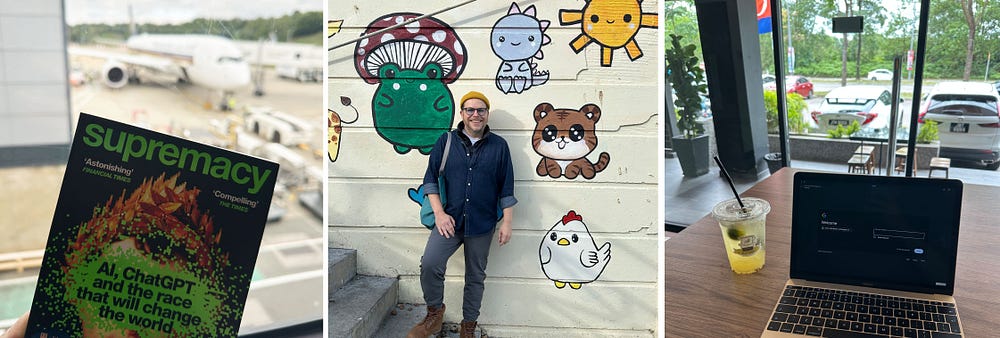
When I sit down to write this annual update from my notes, it’s truly amazing how much work a relatively small team has accomplished while working with service teams across the councils.
January
We started the year by digitising the application forms for all our council tax discounts and exemptions to make it easier for residents to complete and receive discounts, as well as bringing time savings internally when processing.
The programme of work to remove end of life Windows 2012 Server from our estate continued. The income management platform required migration away from these servers and upgrading. We went live with the upgrade this month, but with issues, not knowing we’d have 5 more months of supplier struggles to resolve them.
Another aspiration this year was to implement Product Management skills across the organisation, and I worked with the People & Change team to interview for their new Product Owner. While also putting together a plan for a Digital Skills Bootcamp.
Over two weekends this month a technical group worked on-site at Worthing Town Hall to cutover various aspects of our network onto the new infrastructure. This physical migration was a critical step in modernising the council’s connectivity.
February
As a personal goal, I completed an AI Product Manager Professional Certificate. This qualification was to help push forward my capabilities and understanding in this emerging area.
We worked with our Housing Systems team to roll out a web interface to Orchard Enterprise and deliver a series of overview and training sessions. This not only reduces costs with the reduction of Citrix licences, but also simplifies the platform architecture.
External UKSPF funding was used to commission a project focused on homelessness prevention and debt. This work included prototyping a new triage process, content design for homelessness and council tax, and training staff on co-design principles. The new way of working, based on the successful prototype, is now embedded within the team.
An AI User Group was created to begin exploring and testing Google Gemini. This included the development of an abstraction layer to connect the low-code platform with various AI models for different potential use cases. In addition to this, my blog “Spilling the Beans on Smarter Food Waste Data” detailed the work with data and a possible AI future project.
A programme update was delivered at the Major Programmes Board, marking the launch of Mission Boards. This established a new corporate governance structure, ensuring better oversight and strategic alignment for ongoing projects.
Discussions were held with LocalGov Digital regarding the blueprint for modern digital government. In these talks with Theo Blackwell, I highlighted the absurd cost of APIs from some major suppliers as a significant barrier. This issue hugely limits our ability to connect systems and our transformation work.
Service teams undertook the standard yearly cycle work on Adur Homes Rent Setting and Council Tax Annual Billing supported by Digital in some aspects. These critical financial processes were managed to ensure accuracy and timely delivery.
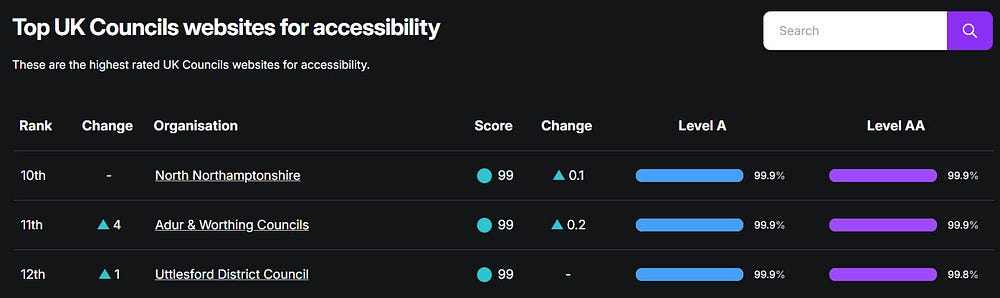
The council website moved up the Silktide index this month to a ranking of 11th in the UK for accessibility, reflecting ongoing efforts to ensure digital services are accessible.
March
A new contract was agreed with StatMap, starting the migration of our GIS to the cloud-hosted Earthlight platform. This move allowed for the decommissioning of more aging servers and was pleasantly one of the most straightforward migrations recently!
Following an application to the MHCLG Digital Planning Improvement Fund, we were notified we were successfully awarded. This financial support covered both the Adur and Worthing Local Planning Authorities and allows us to kickstart some digital improvements with the Planning team.
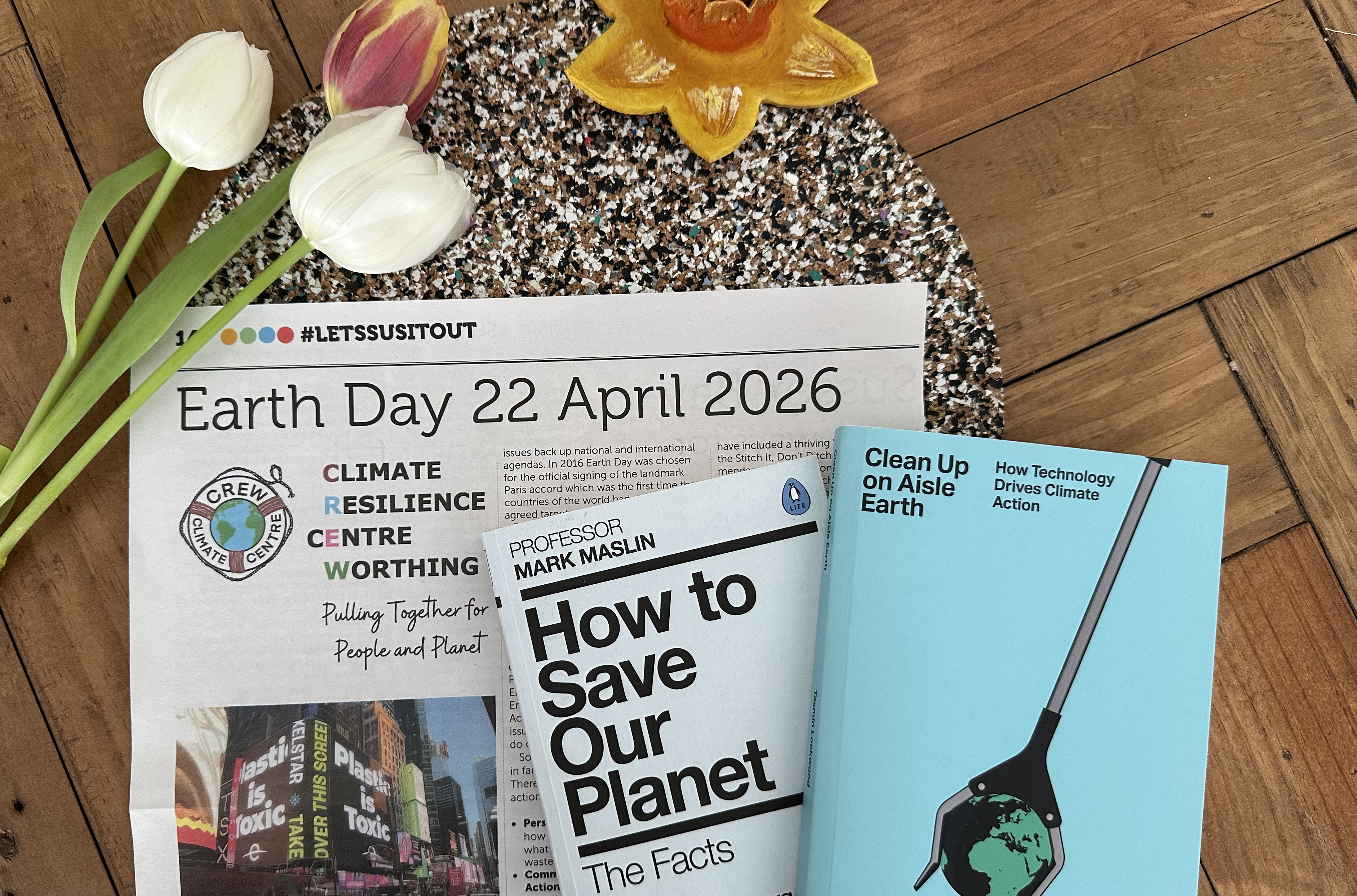
It was Earth Hour on 22 March and I personally took an hour to reflect at home on the state of the planet and our consumption with my husband. We flipped the big red switch on the fuse board, sat in the glow of several candles and talked. It led to wondering how AI will affect our global use of resources.
The “Thriving Together” multi-disciplinary team was formed with the aim of creating civic infrastructure and a participation space. I took the lead as an agile coach to enable the group to work in a sprint-based approach.
I continued my quest to be a better blogger and wrote about “World Book Day: Turning Pages into Good Services” and “Supercharging Social Prescribing by Going Local”. Aiming to share knowledge and highlight service improvements.
The generic Manage Registrations low-code system was reused to take resident applications for Fuel Poverty Grants. This digital solution helped the efficient release of essential funding and support to such an important group.
April
The Open Digital Planning project was kicked off with an initial team workshop to understand the current state of data and ways of working. A maturity assessment was completed to measure the starting baseline for metrics. These metrics will be improved throughout the project journey.
A Show & Tell session was organised to demonstrate how new features of Google Gemini AI are being tested across the councils. Proof of concepts were shared to illustrate potential use cases and benefits. Various Gemini tools, including NotebookLM and AI Studio, were explored and discussed during team sessions. Some of these tools have continued to be tested internally as to how they could support digital workflows.
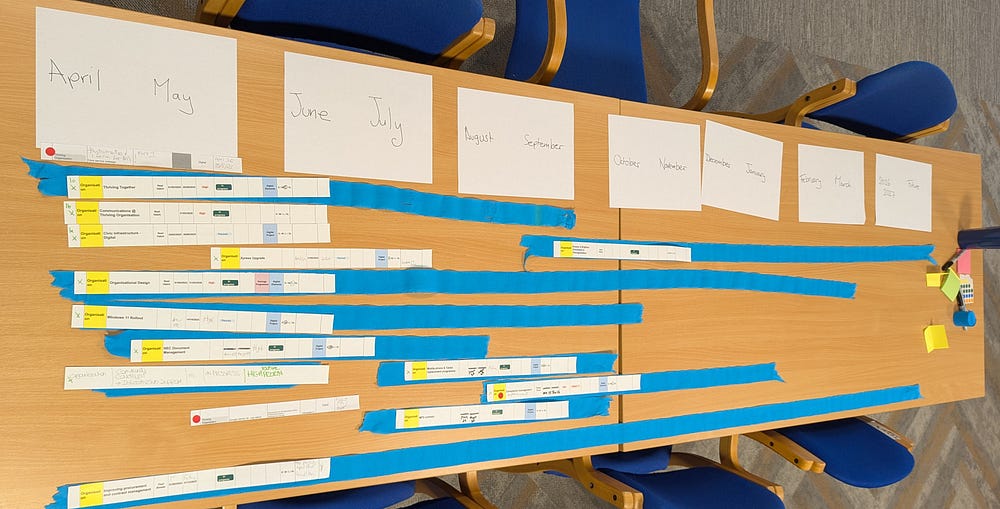
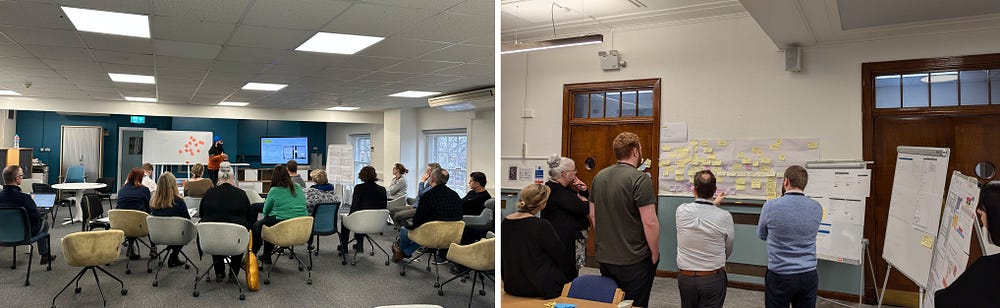
Corporate prioritisation workshops were organised to address the challenge of high project volumes and pressure on core services resources (including Digital, Finance, Legal, HR, Procurement, Comms and Democratic Services). Work was physically mapped out to assist in prioritising and timelining tasks. This output fed into the development of theme-based boards to track work and approve new projects.
Procurement was completed for the GoVocal platform to support the Thriving Together project. The system was implemented, and training was provided to the team.
LocalGov Income Management product demo from Dorset Council and Tailwind Digital showed a great partnership model of how Open Source can be supported. We now need to work through our internal governance to see if this is something we can implement and move away from another legacy supplier!
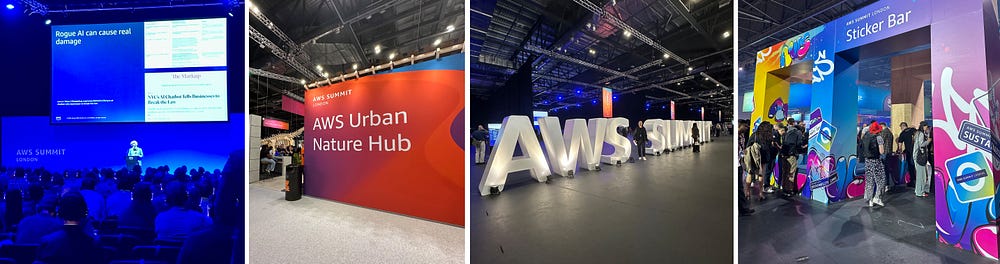
I attended AWS Summit London, gaining valuable insight into new technology from Amazon. Particularly interesting was the Natural History Museum’s work on data and other sustainability initiatives.
The team worked together to improve the systems and pathways used for social prescribing. We enhanced the user experience with clearer, more informative webpages and simplified access to necessary forms. Officers benefited from upgrades to the backend systems and refined internal workflows. A crucial part of this discovery phase involved engaging external GPs to strengthen the referral links between our respective teams. The positive feedback received from the team was fantastic and testament to the value of this work.
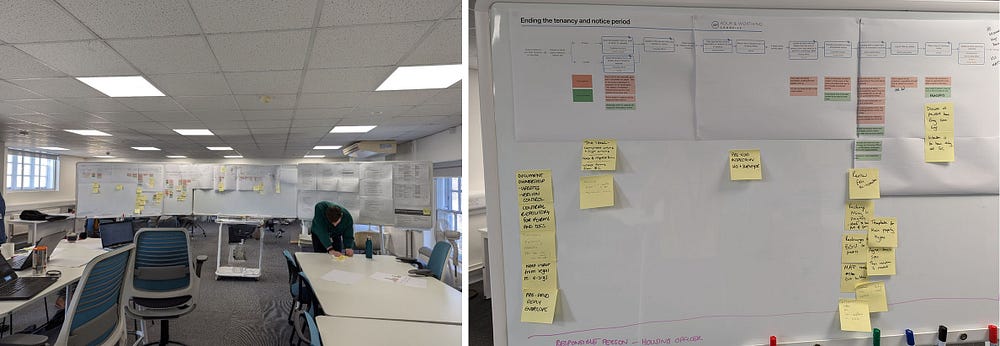
The end-to-end process for Adur Homes void properties was reviewed to address a backlog previously managed on a spreadsheet. Following process mapping and system updates, the backlog was significantly reduced. This brings financial benefits and allows residents to move into social homes sooner.
Changes to residential waste round changes were implemented as a consolidation exercise in preparation for food waste collections. This included changes to our mobile app, the website bin day page, system data, and the Bartec platform.
May
The Operations team carried out user testing of Windows 11 devices and the upgrade process, tweaking and iterating the build, finally putting together a rollout schedule.
Bin There, Done That… Online! Reporting a Missed Bin Just Got Easier after the report a missed bin process and online form was updated and a new bin day page was launched.
The Estates low-code system was updated to introduce property onboarding and improve the monitoring of lease milestone dates. Additionally, changes were made to the app regarding lease and rent events and reminders to enhance management efficiency.
A Project Initiation Document was launched as part of our corporate governance, initially prototyped as a low-fi Google Doc. Following a mini discovery phase and project, we focused on an MVP instead of the entire process. This approach helped us identify missed elements and areas needing refinement. The subsequent digital version was developed using the existing, reusable ‘Manage Registrations’ system — awaiting go-live.
Towards the end of last year we halted the implementation of Idox Cloud as it just didn’t meet our transformational requirements, so we had to upgrade our Uniform Planning and Building Control system this year which after several months was completed. Unimap Web was also installed but not put into live yet.
Liberty Spark was used to map the new beach huts management system process. The generic Manage Accounts low-code system was then reused for the new system, including automated debt recovery and the removal of an archaic MS Access database.
Testing commenced to investigate the feasibility of sending council tax bills by email rather than post. This work involved the creation and review of new templates to ensure effective communication.
June
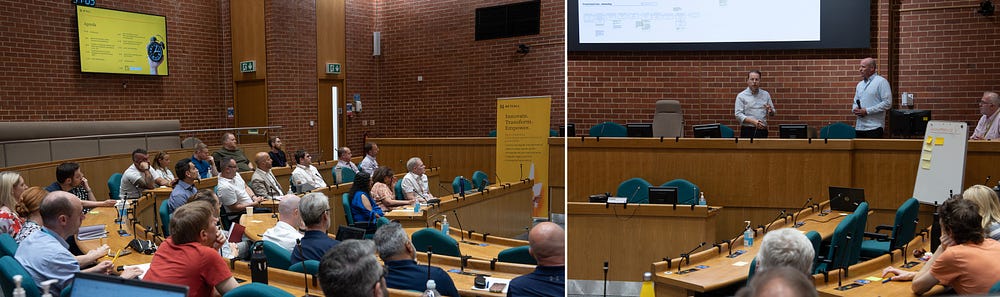
I stepped outside my comfort zone to present a talk at Hertsmere Council on how we use Liberty Spark to map the processes for our Beach Huts. The day was engaging, with various councils sharing their work on the Netcall platform. The council owns Elstree TV Studio; so we enjoyed a drink in the studio bar afterward, though we didn’t spot any celebrities.
With the introduction of charges for additional waste bins, we developed a request form and process — including checking eligibility for free bins using Council Tax Support or Housing Benefit references, and a payment using GOV Pay if not eligible: This project was much more complex than we had originally thought as there were several different routes that needed to be considered depending on the individual’s circumstances.
I wrote my initial blog about our work on the Open Digital Planning funded project. The new team benefited from several collaborative and upskilling sessions, including foundational training in Content Design, Impact Measurement, Procurement, and AI. The programme also featured various data drop-ins, a show and tell event, and a general meeting. Some of the team attended an event at Tower Hamlets which served as a great opportunity for learning and networking.
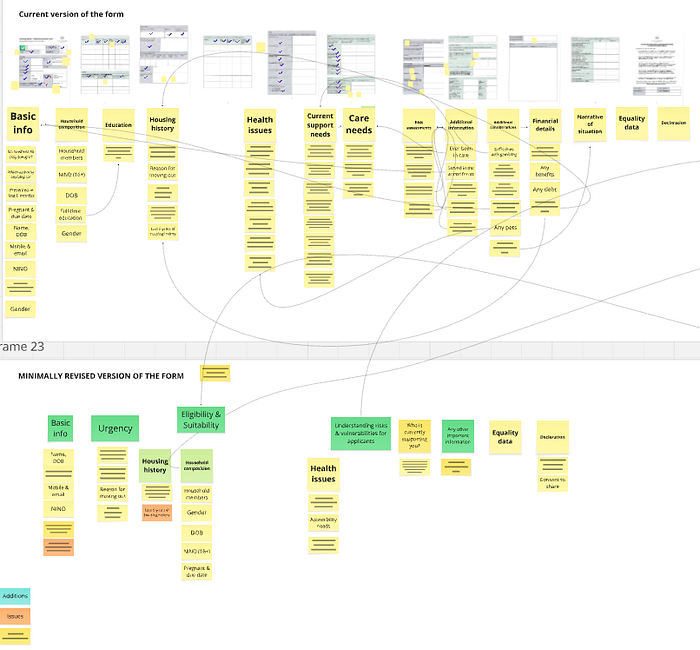
We collaborated with the Housing Needs team to streamline two essential forms. A shortened Housing Advice triage form was designed to capture only critical questions for homelessness risk, resulting in a much shorter, user-friendly form which is currently under development by Home Connections. We digitised the paper-based process for approving Temporary Accommodation placements. Previously, this involved securing a manager’s wet signature, and then scanning it. The new digital process automatically routes the form to a manager group for approval and sends a digital copy of the authorisation back to the staff member.
July
I started my new role as Interim Head of Technology and Design, a massively exciting personal step. Taking on responsibility for IT Operations, Infrastructure, Security, as well my existing Transformation and Development areas, plus Service Design and Business Analysis. I’m really looking forward to these new challenges, skills and experiences. I also completed a Generative AI Essentials on AWS course to continue my personal development.
Due to the closure of a large car park, we modelled parking data to assess usage and availability at peak times. AI tools were tested and compared to assist along with the manual analysis of these datasets.
A mini “emergency” project was undertaken to support the recording and managing of abandoned vehicle cases following the unexpected end of a third-party platform. This case type was rapidly integrated into the “Report It” system, requiring design development that ultimately improved the platform for all case types. Impressively, we managed to get live with a really quick turnaround, showing the teams skill to work under pressure.
A workshop was conducted by Service Design and Business Analysis, leading to a short discovery piece on digitising the tenancy sign-up process for Adur Homes. This work has been integrated into the larger roadmap for future development.
Our project manager worked with HM Land Registry to examine the Land Charges team’s data and devise a delivery plan for checking 40,000+ records. This Local Land Charges (LLC) migration aims to move all local authority registers into a single, national digital register for England and Wales, replacing fragmented local systems with one central, geospatial database for faster, clearer property searches.
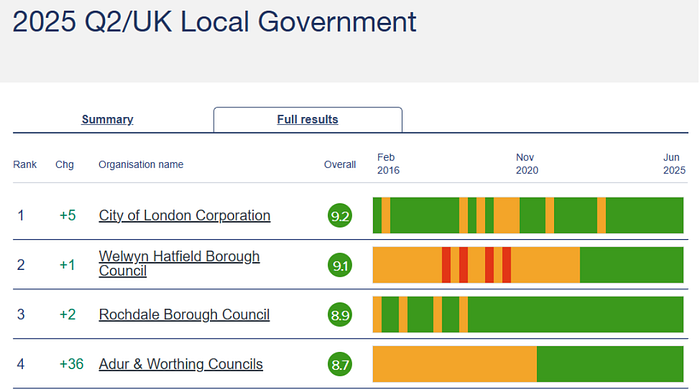
Our website also ranked 4th in the UK for accessibility this month in the Sitemorse leader board!
August
Processes in the cash office were reviewed following team changes, identifying opportunities to automate manual tasks. Changes were also implemented to ensure the correct information is collected to track payments that cannot be allocated. Remaining payment processing was decommissioned from our legacy supplier, moving fully to GOV.UK Pay. This transition marks a significant step in modernising and unifying payment systems.
Work continued on the Beach Hut licences and platform, alongside the implementation of Google MDM. The first Open Digital Planning dataset, covering conservation areas, was also published during this period.
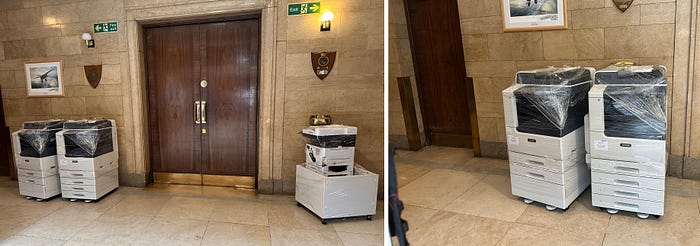
A new fleet of multi-functional print devices were rolled out across council sites, achieving nearly a 50% reduction in devices and delivering substantial cost savings.
We started user acceptance testing from the upgrade of our core documentation management system, staff shadowed the supplier with the upgrade process so we can carry it out ourselves in future providing supplier savings.
Significant progress was made on compliance system changes, specifically the processing of Electrical Installation Condition Reports (EICRs). Project scoping is complete, and system improvements are underway to streamline the EICR process. A major focus has been on contractor onboarding to use the new portal, which allows contractors to submit certificates and information directly. This enables automatic system updates and eliminates manual data entry.
September
The Extract AI team from the Incubator for Artificial Intelligence, part of Government Digital Service contacted us after reading one of my ODP blogs. We met with them and sent them various quality historic Tree Preservation Orders for testing their AI platform to extract structured data.
Learning and Development launched our new iHasco training platform, while we built the middleware API to connect user data to staff records.
The rollout of Windows 11 to end user devices reached over 85% via automated updates which was a great result, with the remaining needing some degree of manual intervention.
A survey and workshops were conducted to understand issues with the recruitment process, running alongside an upgrade to the applicant tracking system. A list of improvement ideas was developed with the HR team, and the delivery of this project is now being led by the new People & Change Product Owner.
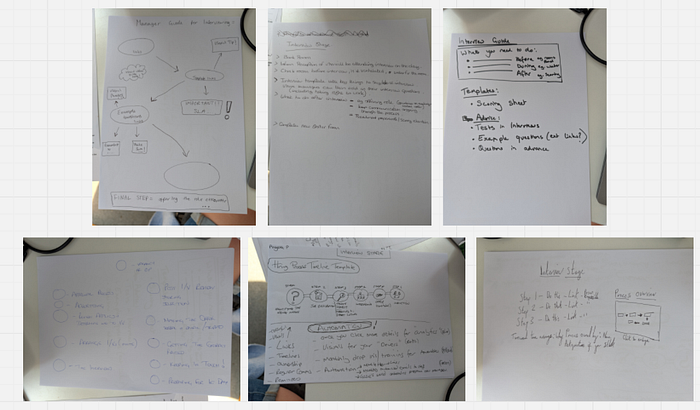
Drop-in sessions were held to better understand the information needs of people living in Temporary Accommodation and to test ideas for a new checklist and booklet. Teams from wellbeing, social prescribing, and external partners like Age UK participated to help develop improved information resources.
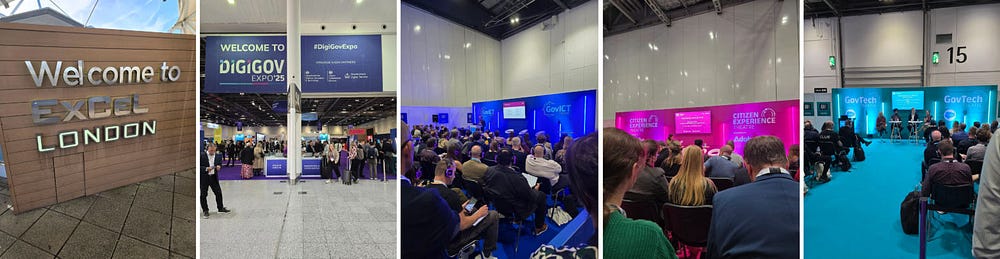
Attendance at the DigiGov Expo ’25 provided valuable networking opportunities with professionals from various sectors. We gained insights into developments from organisations like the LGA and MHCLG, with the implications for our local government work.
October
The multi-year rollout of gigabit fibre to 24 council buildings was completed, largely funded by West Sussex Business Rate Pool. This project started in 2019, and was instrumental in the significant CityFibre investment into Worthing.
The upgrade of the core document management system, NEC, was successfully completed and went live. Despite the challenges of having no clear product owner, the process was managed quietly and effectively through direct communication and 1–2–1 sessions. No one experienced any disruption and the services continued.
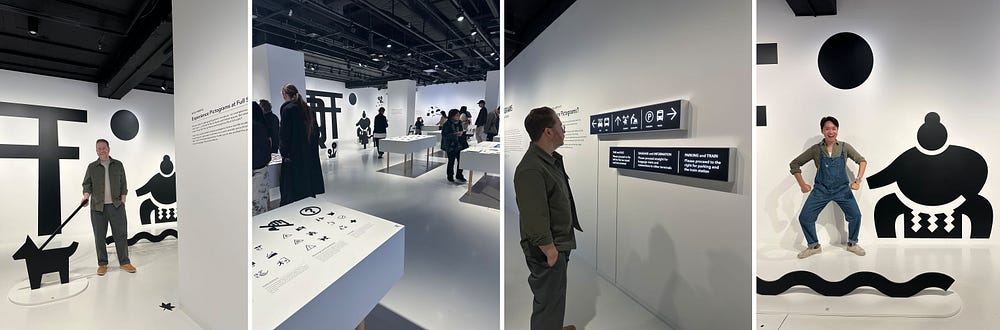
I managed a trip to Japan House in London in personal time to see the really interesting Pictogram Exhibition about their history and creation — I love icons and their use in user interfaces.
A taskforce from income, housing, and digital teams reviewed the process for contacting people in debt for Temporary Accommodation. Taking learning from our approach to council tax debt, we reviewed the steps and current letters. We had already introduced a call to people placed in TA a few days after their placement to check they were ok and explain any charges. We then added in a text message stage, and revised the wording on the letters to make sure that legal terms were explained in plain English. The digital team then built the new escalation tree in our system to automate parts of the process.
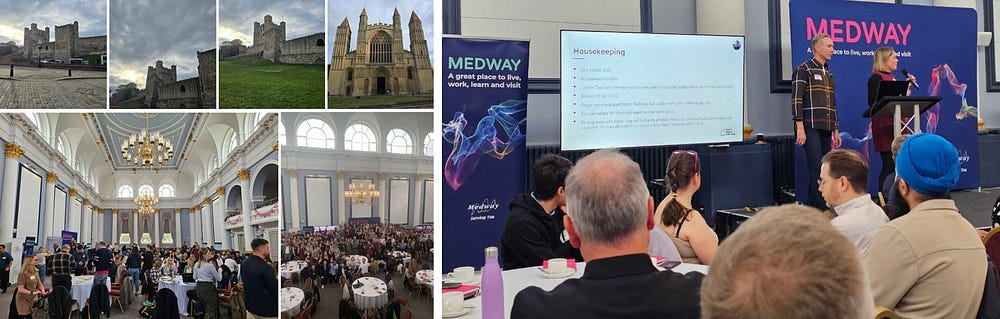
The Open Digital Planning event in Medway was attended by various team members, providing a great opportunity for networking and learning from others how we could improve our planning services. We are hoping to use these connections as we move forward with the transformation element on this project.
Work was undertaken to ensure compliance with ‘Awaab’s Law’ regulations regarding damp and mould reporting in Adur Homes properties. Systems and ways of working were updated to meet new timelines, and reporting for all repairs was reviewed.
November
The team shared their story, challenges, and progress with MHCLG and other Local Planning Authorities at an Open Digital Planning Show and Tell event. The second milestone for the project was also completed by uploading the Article 4 Directions dataset.
In-person meetings were held with digital leaders from across West Sussex to plan LGR data gathering for systems and contracts. Participation in the new LGR DDaT Network has been invaluable for understanding the complexity of merging and disaggregating services.
The PlotBox project for Bereavement Services was kicked off, establishing initial tasks for data gathering and implementation. This platform promises to be a game-changer, involving drone mapping of cemeteries and the digitisation of paper records.
December
The “Report It” project is wrapping up with the launch of textile bank forms, following the recent additions of public conveniences and abandoned vehicles. With development work on data reporting also concluding, the focus will now shift to encouraging services to use the collected data.
Automations are being introduced across several council tax and benefits processes to reduce manual workload. Work was done with teams to analyse processing times and develop a business case for these implementations.
Looking Forward: Our Vision for 2026 ?
Next year will be all about priorities, security and (of course AI) — finding a balance between continuing to move forward, keep ourselves secure from the very real cyber threats but also allowing enough capacity to examine the upcoming needs of Local Government Reform.
Thanks to the amazing Digital team at Adur & Worthing and all service teams who have made this work possible.
?See you after the holidays!